


My 9/11 story is thankfully, not nearly as compelling or emotional as it was for thousands of others. I was not there when the attacks took place, and I didn’t have any loved ones in the World Trade Center that day. For this reporter, September 11th, 2001 started out as an ordinary day. This was before children and marriage, and I slept regularly without an alarm clock, getting out of bed whenever my night-shift trained body would wake up.
Moments after the plane hit the first tower at 8:46AM, I received a phone call from my then girlfriend Kara telling me what had happened. I turned on the television and witnessed the scene unfold, assuming like many others, it was just a terrible accident. I watched in horror as the second plane came in, and knew we were under attack.
I then got a call from my news director Deborah Johnson, who told me to get into the station right away and head for New York. Within 15 minutes I showered, shaved and packed a bag for three days. I was there for the better part of two weeks.
I took a cab to Broadcast House where I found the newsroom to be a hive of frantic activity. The dozen or more television sets were all showing searing images of both massive skyscrapers ablaze, spewing smoke. Like so many Americans, I felt profound sadness and disbelief at the massive loss of life.
Crews were scurrying in and out of our newsroom, grabbing equipment. The phones were ringing, assignments were being shouted out, and one young woman on the assignment desk was visibly upset. Another hardened journalist cupped her hand over her mouth in horror as an image of someone jumping from the World Trade Center was shown on television.
I was assigned to get on the internet and find a list of the tenants of the World Trade Center and look for any Connecticut connections. I remember calling a few of those companies, but was unable to get through.
At that point, Deborah told photographer Mike Kopelman and me to start heading toward New York and await further instructions. The highways didn’t seem very busy as we listened to WCBS News Radio 880. I remember after one of their iconic chimes rang at the top of the hour, the first words out of the anchor’s voice were “The World Trade Center is gone.” Mike and I discussed how the towers could have fallen, and we both thought they might have tipped over, rather than each floor collapsing onto the one below.
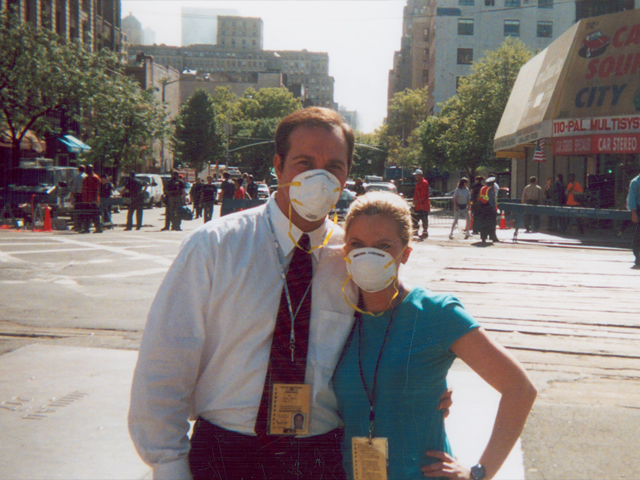
This was my second trip to the World Trade Center as a reporter. Back in 1993, I rushed off to lower Manhattan when terrorists detonated a truck bomb in the garage of the North Tower, killing six people and injuring a thousand more. As you can see here, I stood fairly close to the towers for my reports during three days there, thinking how difficult it would be to knock down these gigantic landmarks. 8 and a half years later, terrorists had figured out to do just that.
We got a call to head to Stamford Hospital to await the arrival of survivors. Everyone presumed the New York hospitals would be filled to capacity, and hundreds of victims would be treated here. It didn’t take very long for us to learn that would not be happening. So we moved on.
The station wanted us on the air at 5PM, so our engineer John Discenza, set up our truck in the Bronx, with a view of lower Manhattan in the background. The tunnels and bridges were closed so driving into Manhattan would have to wait anyway. After our live reports we moved into Manhattan. Mike and I drove as far south as we could, parked the car and started walking toward Ground Zero. We got as far south as Tribeca, passing survivors and rescue workers along the way. They were covered in dust, sweat, and dirt and some were so distraught they couldn’t even begin to describe what they saw.
I ended up staying in Manhattan for two straight weeks. The hardest part was talking to the families of survivors, carrying pictures of their loved ones, and days later they returned with combs and toothbrushes that contained DNA. They hung homemade posters with images and stories of their fathers, mothers, brothers, daughters, fiances, husbands, and friends. I felt helpless in their hour of need, although many frustrated and grieving relatives told me it was a consolation to them knowing pictures of their lost loved ones were being broadcast and the stories of their lives were being told.
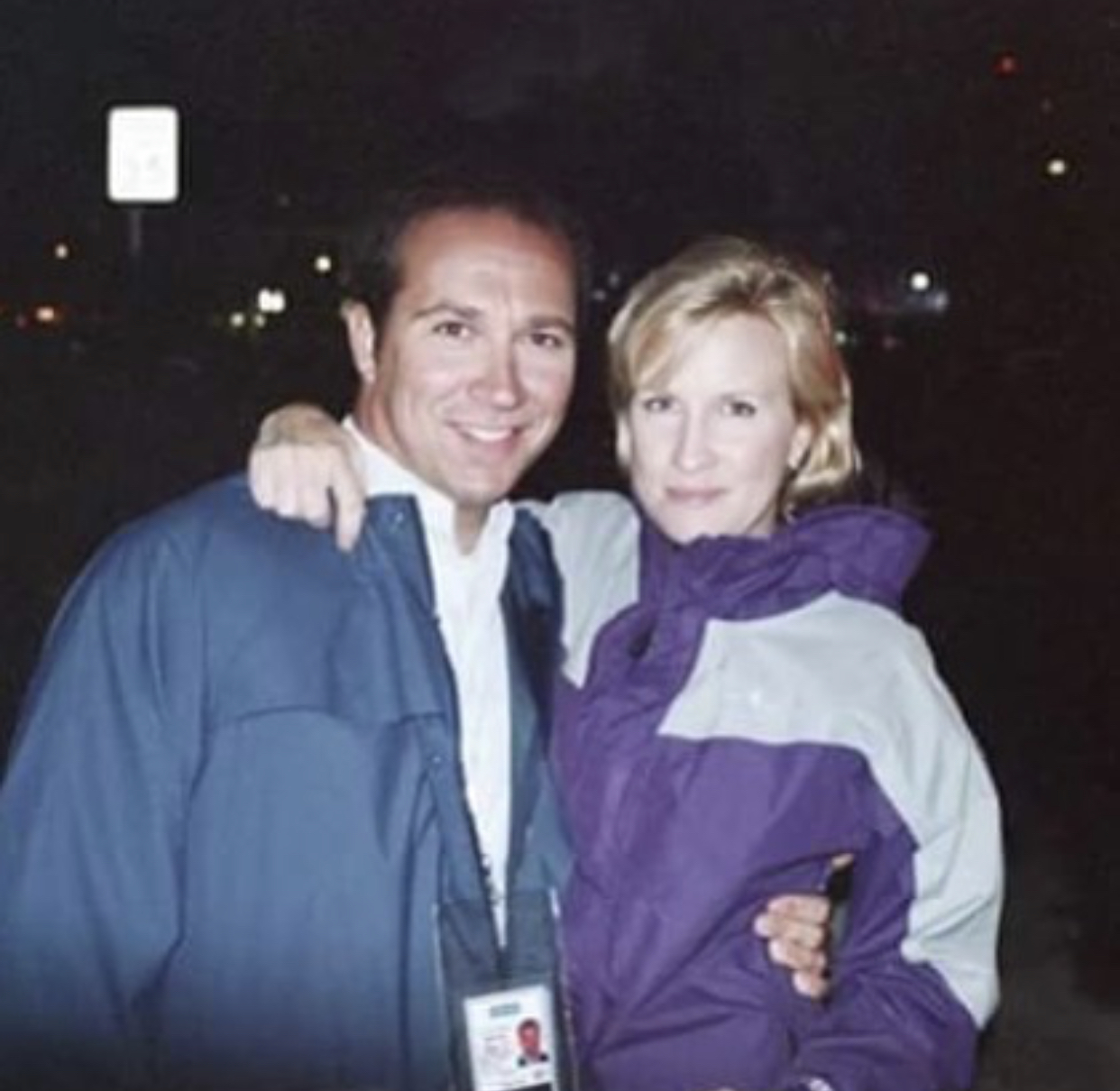
Uplifting moments were few, but one of them came unexpectedly when I ran into Mika Brzezinski, then with CBS News. Mika and I became friends as rookie reporters at WFSB in 1992, and to see such a familiar face, a loyal, dear friend in a scene of death, destruction and despair was an emotional boost to both of us. Our reunion was brief, as we both had deadlines for grim assignments, but it was a highlight of a tour of duty we both needed.
I never tired of reading those flyers. One night, Kara and I came across a fire station that lost nearly all of its firefighters. The candles and messages written by children brought many passersby to tears, and brought us to tears as well. On a personal note, Kara and I never felt closer, and realized during this experience we would never be apart. We got engaged the following spring.


I also interviewed some survivors, including one man from our state who was in a windowless conference room in one of the towers when the building shook violently and ceiling tiles came crashing down. From there he went to a smoke-filled stairway. A month later he was on heavy medications because he couldn’t cope with what he’d been through.
May we never forget.
Categories: Connecticut

